
Thermal styling tools like blow dryers, curling irons, and straighteners have revolutionized how we manage our aesthetic, yet they are among the most common sources of chronic hair damage. The high temperatures required to reshape the hair’s hydrogen bonds can easily lead to “bubble hair” a condition where internal moisture turns to steam and explodes through the hair shaft if used incorrectly. Most damage is not caused by the tools themselves, but by a lack of technique and a misunderstanding of how hair reacts to extreme heat. By identifying and correcting these common pitfalls, you can achieve your desired look without compromising the long-term health of your strands.
Styling on Damp or Improperly Dried Hair
Perhaps the most destructive mistake in heat styling is applying a flat iron or curling tong to hair that is still slightly damp. When intense heat (often exceeding 180°C) touches water molecules trapped inside the cortex, the water boils instantly. This rapid expansion creates microscopic fractures in the hair fiber, leading to permanent frizz and brittleness.
- The 100% Rule: Hair must be completely dry before it comes into contact with any “clamping” heat tool. Even a 5% moisture level can cause significant structural damage.
- Rough Drying First: When using a blow dryer, start by “rough drying” with your hands until the hair is 80% dry before introducing a brush. This minimizes the amount of time the hair is stretched and under direct tension while wet.
Neglecting Sectioning and Temperature Control
In an attempt to save time, many individuals try to style large chunks of hair at once. This leads to uneven heat distribution; the outer layers of the section are scorched while the inner layers remain untouched, forcing you to pass the iron over the same area multiple times.
Modern styling tools often reach temperatures up to 230°C, which is far beyond what most hair types can safely handle. Fine or chemically treated hair should never be styled at the same temperature as coarse or virgin hair.
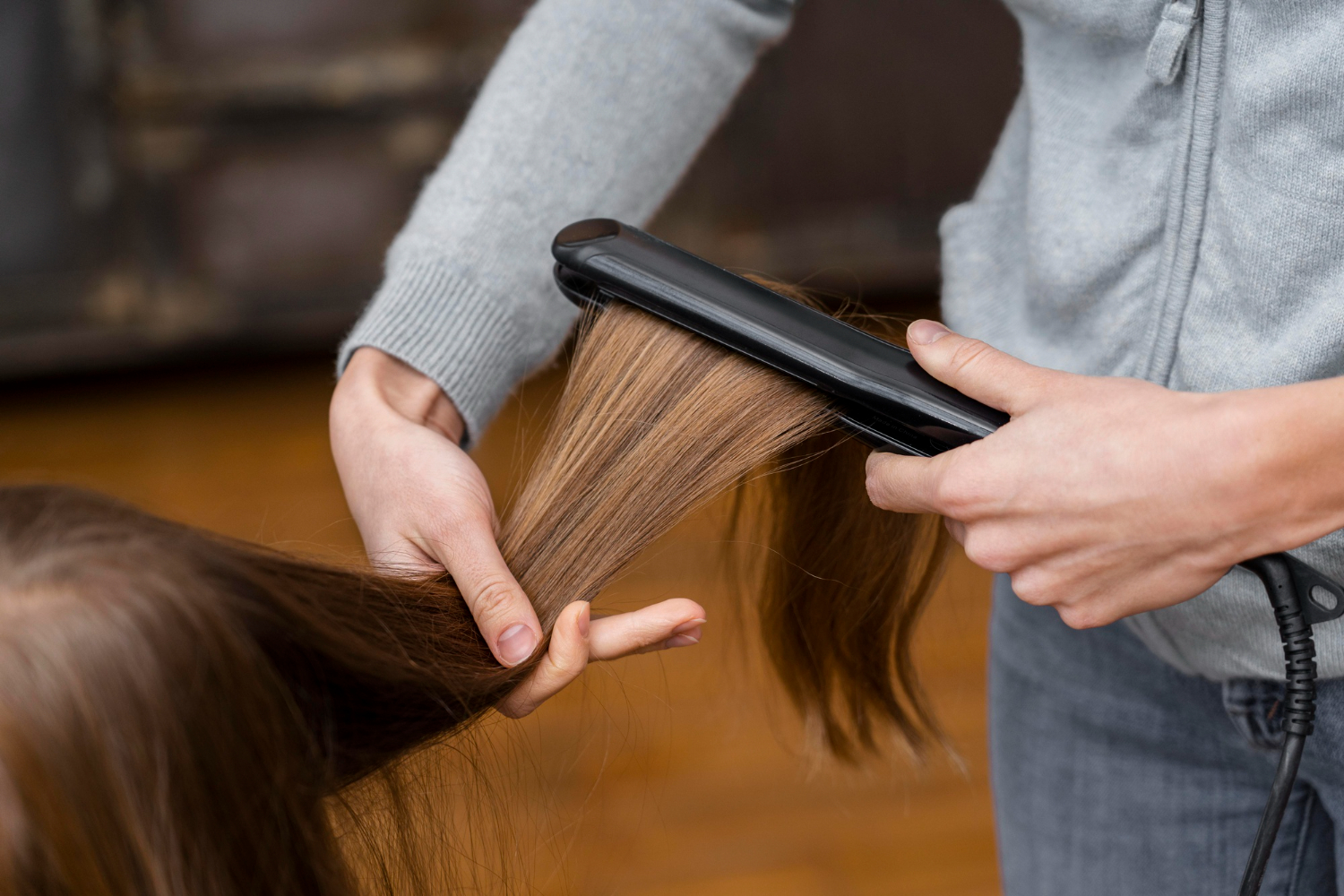
- Sectioning for Success: Work in small, manageable sections no wider than the styling tool itself. This ensures a “one-pass” result, which is far less damaging than repeated exposure.
- Variable Heat Settings: As a general rule, keep your tools below 185°C. For fine or bleached hair, even lower temperatures (150°C-160°C) are often sufficient to achieve the desired shape without causing a protein breakdown.
Misuse of Products and Tools
The sequence in which you apply products and the type of tools you use can either shield your hair or accelerate its destruction. A common error is applying heavy oils or alcohol-based hairsprays before using a flat iron. This can effectively “cook” the hair or cause it to stick to the plates, leading to mechanical snapping.
The Danger of Incorrect Product Sequencing
A common and devastating error is applying heavy oils or alcohol-based hairsprays immediately before using a flat iron. High heat can effectively “cook” oil-saturated hair, while the resins in hairspray can cause the hair to stick to the plates. This results in mechanical snapping and “bubble hair” fractures where the internal moisture is trapped and boiled.
Thermal Protectors
Skipping a heat protectant is the equivalent of touching a hot pan without an oven mitt. These products contain specialized polymers and silicones that act as a thermal buffer, slowing down the transfer of heat to the cortex and preventing the cuticle from “cracking.” Always apply these to damp hair to ensure full coverage before any heat is introduced.
Brush Material and Heat Retention
Brush material matters significantly for temperature control. Using metal-core round brushes with a blow dryer can be dangerous because the metal acts as a secondary heating element. It can reach temperatures that singe the hair from both sides simultaneously. Opt for ceramic brushes for even distribution or natural boar bristle brushes to provide tension without the risk of overheating.
The Pitfall of Dirty Styling Tools
Using straighteners or curling irons with visible product buildup creates an uneven heating surface. This burnt-on residue causes “drag,” which pulls at the hair cuticle and leads to microscopic tears and split ends. Cleaning your tools regularly ensures a smooth glide and consistent heat delivery.
Ignoring Bristle Density and Type
Using a stiff, synthetic brush on fine hair while blow-drying can cause excessive friction and breakage. For fragile or thin hair, using a flexible, soft-bristle brush is necessary to manage the hair without over-stretching the fibers when they are at their most vulnerable (warm and elastic).
Improper Tool Calibration
Using older tools that do not have digital temperature displays or consistent heat recovery can lead to “hot spots.” When a tool cannot maintain a steady temperature, you are often forced to pass over the same section of hair multiple times, which compounds the thermal damage on specific areas of the hair shaft.
Post-Styling Cool Down and Recovery
Styling doesn’t end when the tool is turned off. A frequent mistake is immediately brushing through a fresh curl or tucking hair behind the ears while it is still warm. Because hair is “plastic” when heated, it needs to cool down to “set” its new shape. Disrupting the hair before it cools leads to a style that falls flat within an hour, often tempting the user to re-apply heat later in the day.
To maintain the integrity of your style and the health of your hair, always allow your strands to return to room temperature before applying finishing oils or running your fingers through them. By respecting the physics of heat and focusing on precision over speed, you can enjoy a polished look while keeping your hair’s structural “architecture” intact.