

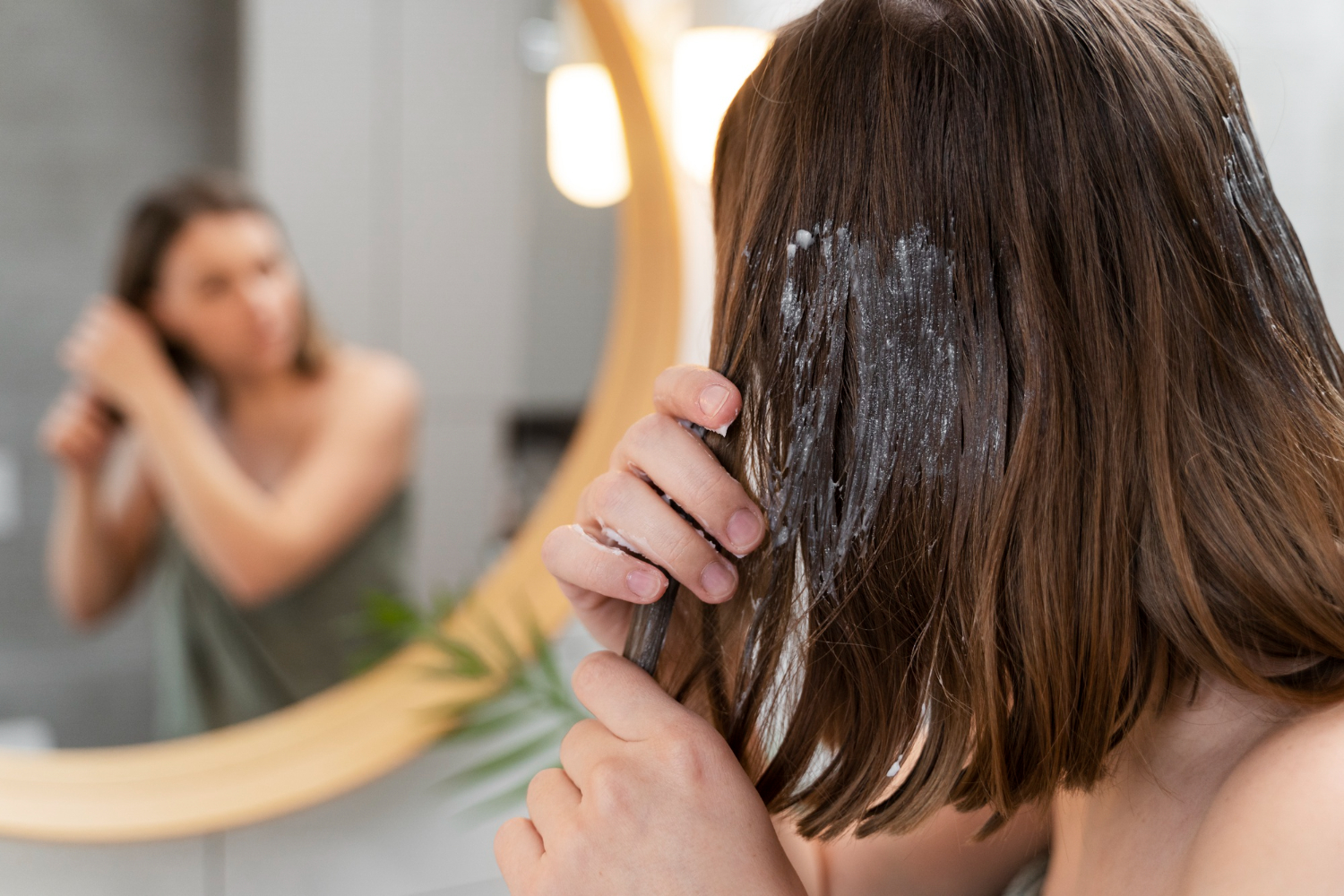
Hair masks are far more than just “thicker conditioners.” While a standard conditioner works on the surface to detangle and smooth the cuticle, a high-quality mask is formulated to penetrate the deeper layers of the hair shaft, specifically the cortex to deliver concentrated proteins, lipids, and moisture. However, because of this high concentration, using a mask too frequently or too sparingly can lead to diminishing returns. Finding the right balance is essential for maintaining the hair’s elasticity and preventing issues like hygral fatigue or product buildup.
Determining Frequency Based on Hair Type and Texture
There is no “one-size-fits-all” rule for hair masking; the ideal frequency depends largely on your hair’s porosity, thickness, and current state of health. Hair that has been chemically treated or frequently exposed to heat requires more intensive support than natural, untreated hair.
- Dry or Damaged Hair: For hair that feels straw-like or has visible breakage, a weekly treatment is usually recommended. This consistent infusion of moisture helps to repair the lipid barrier and improve flexibility.
- Oily or Fine Hair: If your hair is naturally thin or your scalp produces excess oil, using a mask more than once every two weeks may weigh your hair down, making it look flat and greasy.
- Curly and Coily Textures: Due to the spiral shape of the hair shaft, natural oils struggle to travel from the scalp to the ends. Curly hair often thrives with a mask application once or even twice a week to maintain curl definition and prevent frizz.
The Dangers of Over-Masking
It is a common misconception that leaving a mask on longer or using it more often will yield better results. In reality, hair has a limit to how much moisture it can absorb. When the hair is constantly saturated with water and heavy treatments, it can lead to a condition known as hygral fatigue. This occurs when the hair cuticle expands and contracts too frequently, eventually weakening the hair fiber and causing it to lose its “snap” or elasticity.
Similarly, an over-reliance on protein-heavy masks without balancing them with moisture can lead to “protein overload.” This makes the hair feel stiff, brittle, and surprisingly, more prone to snapping. A healthy hair routine is a delicate dance between strength (protein) and flexibility (moisture).
Strategic Application for Maximum Efficacy
The way you apply a hair mask is just as important as how often you use it. To ensure the active ingredients can actually penetrate the hair shaft rather than just sitting on the surface, you must prepare the strands with precision. Applying a mask to dirty hair is ineffective because natural oils and product buildup act as a chemical barrier, preventing the mask’s nutrients from reaching the cortex. Furthermore, you should always apply the product to towel-dried hair. If the hair is soaking wet, the excess water fills the porous gaps in the hair shaft and dilutes the product, significantly reducing its potency and preventing the formula from adhering to the strands.
The distribution of the product should be highly intentional, focusing primarily on the mid-lengths and the ends. These areas represent the oldest parts of the hair and have endured the most environmental and mechanical stress, meaning they are naturally more porous and in need of structural repair. Unless a mask is specifically formulated for scalp health, keeping it away from the roots is vital to avoid clogging the hair follicles or causing the hair to look flat and oily shortly after washing. Using a wide-tooth comb during this stage can help ensure that every single strand is evenly coated for a uniform result.
To truly intensify the treatment, the role of heat can be a decisive factor. Using a steamer or wrapping the hair in a warm, damp towel creates a humid environment that helps to gently lift the cuticle scales. This “opening” of the hair’s outer shield allows the heavy-duty proteins and lipids in the mask to enter the hair shaft more effectively, providing a deep-conditioning effect that lasts through multiple washes. Without this gentle thermal assistance, some thicker masks may only provide a superficial coating that washes away easily.
The final and most critical step is the rinsing process. Residual product left on the hair can attract dust and micro-pollutants, leading to a heavy buildup that eventually dulls the hair’s natural shine. It is essential to rinse thoroughly with lukewarm or cool water until the hair feels clean but retains a smooth, silk-like texture. A cool rinse at the very end serves a secondary purpose: it helps to snap the cuticles shut, locking the newly absorbed nutrients inside the hair shaft and creating a light-reflecting surface for maximum vibrancy.
Seasonal Adjustments to Your Routine
Your hair’s needs change with the environment. During the harsh winter months, indoor heating and cold winds strip moisture at an accelerated rate, meaning you might need to increase your masking frequency. Conversely, in humid summer months, you may find that your hair requires less frequent deep conditioning. By staying attuned to how your hair feels whether it’s lacking shine, feeling tangly, or losing its bounce you can adjust your mask schedule to keep your hair in peak condition year-round.