
Fine hair is often misunderstood in the world of professional hair care. Technically defined by the small diameter of the individual hair shaft rather than the density of hairs on the scalp, fine hair lacks the structural “bulk” found in medium or coarse textures. This structural reality means that fine strands are highly susceptible to becoming weighed down by sebum, environmental pollutants, and heavy cosmetic ingredients. The primary challenge is a delicate architectural one: providing enough nourishment to prevent breakage while ensuring the hair remains light enough to maintain lift and movement. Achieving a voluminous, healthy look requires a departure from standard hair care myths and the adoption of a routine rooted in weightless hydration and structural reinforcement.
The Foundation: Strategic Cleansing and Scalp Management
The foundation of a fine hair routine starts with a cleansing process that prioritizes the removal of excess sebum and product residue without stripping the hair of its essential internal moisture. Because fine hair has a higher surface area-to-volume ratio, it tends to show greasiness much faster than other hair types, often requiring more frequent washing. However, frequent washing can lead to dry ends, making the choice of chemistry vital.
- Clarifying Shampoos: Incorporating a gentle clarifying wash once a week is non-negotiable for fine hair. It ensures that mineral deposits from hard water and styling polymers from hairsprays are fully removed, allowing the hair to lift naturally from the root.
- The “Reverse Washing” Method: For those with particularly dry or damaged ends, applying a lightweight conditioner to the mid-lengths before shampooing can provide a protective barrier. This ensures the ends are nourished while the shampoo focuses on the roots, leaving the final result completely free of heavy residue.
- Protein-Infused Volumizers: Look for shampoos that utilize hydrolyzed proteins, such as rice, silk, or wheat protein. These microscopic molecules temporarily bond to the hair shaft, effectively increasing its diameter and providing the “body” needed for styling without adding physical weight.
The Art of Weightless Hydration and Conditioning
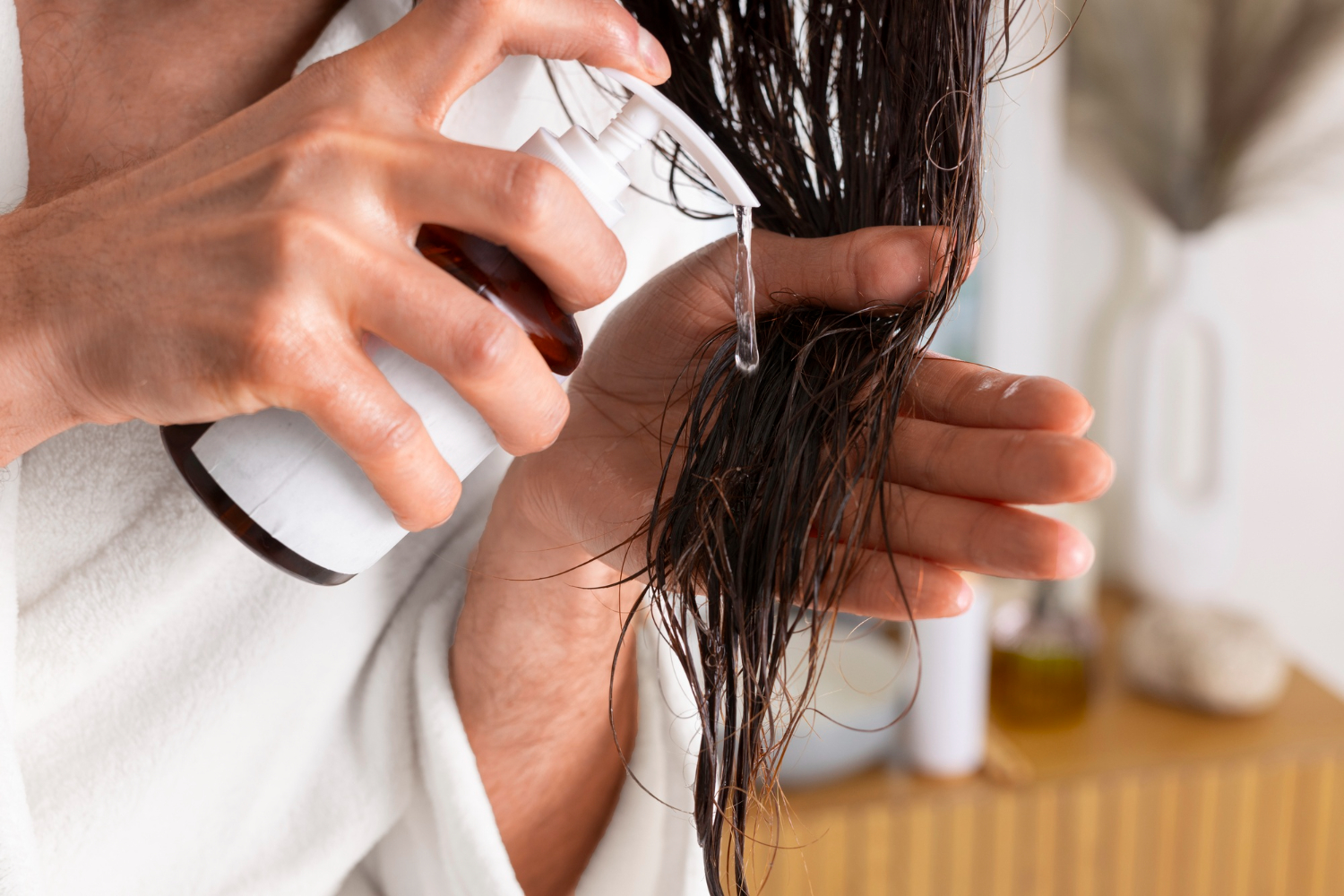
Many individuals with fine hair mistakenly avoid conditioner altogether to prevent flatness, but this is a counterproductive habit that leads to brittle ends and uncontrollable static. The goal is not to skip hydration, but to shift toward “liquid” or “foam” conditioners that offer high slip but low oil content. Traditional masks containing heavy concentrations of shea butter, coconut oil, or heavy silicones should be avoided in favor of formulas that use hyaluronic acid or glycerin to draw moisture into the hair.
When applying any hydrating product, it must never touch the scalp or the first five centimeters of the hair. Focus exclusively on the bottom two-thirds of the hair where the strands are oldest and most porous. Additionally, rinsing with cool water is especially beneficial for fine hair; the cold temperature helps to contract the cuticle tightly, making the hair feel slightly firmer and more resilient. This firmness is the secret to a blow-dry that lasts throughout the day rather than falling flat within hours.
Strategic Styling and Thermal Protection
Fine hair is biologically more fragile than other textures because the cortex the heart of the hair is thinner and has fewer protective layers. This makes fine strands extremely susceptible to thermal damage, which can lead to permanent thinning of the hair shaft. Every styling step must be calculated to maximize volume while minimizing mechanical and heat-induced stress.
- Scaffolding with Root Lifters: Targeted sprays and mousses applied directly to damp roots provide a “scaffolding” effect. These products contain resins that harden slightly as they dry, supporting the hair at the base and preventing it from lying flat against the scalp’s natural oils.
- Upside-Down Blow Drying: Using a medium heat setting while drying the hair upside down helps to set the roots in an upward direction. This creates a natural “memory” in the hair’s structure, providing a body that doesn’t rely solely on heavy styling products.
- The Tension Balance: Avoid using high-tension round brushes with metal cores, as these can easily overheat and snap fragile strands. Instead, opt for a vented brush with flexible bristles to allow maximum airflow, reducing the time the hair is exposed to direct heat.
Long-Term Maintenance and Precision Cutting
Beyond daily products, the way fine hair is cut significantly dictates its perceived thickness and overall health. Because the ends of fine hair are so delicate, they tend to become “wispy” or “see-through” very quickly. Frequent “micro-trims” every 6 to 8 weeks are essential to remove these thinning ends before they can split further up the hair shaft.
From a styling perspective, blunt cuts such as a sharp bob or a straight-across long cut are generally the most favorable. These styles create a dense-looking edge that gives the illusion of thicker hair. While some internal layering can add movement, over-thinning or excessive “shingling” can remove too much of the hair’s limited bulk, resulting in a flat appearance. By combining a diet rich in hair-building blocks like biotin and zinc with a minimalist, high-quality product approach, you can ensure that your fine hair remains strong, bouncy, and full of life.